Milan, Italy
1930s private residence
1930s private residence
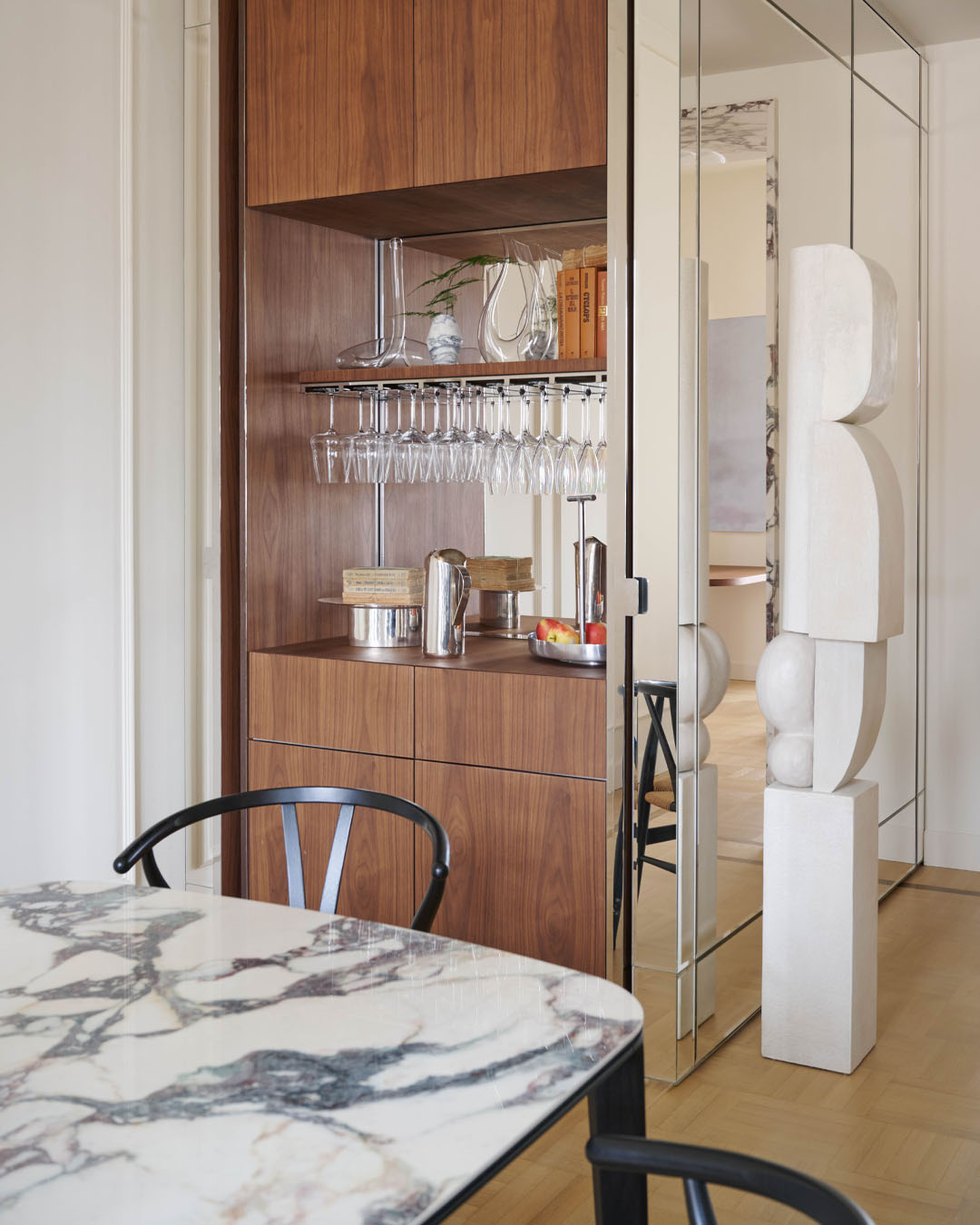
A 1930s Milanese residence reinterpreted by Moitié Studio, where Ariostea surfaces shape space through light, continuity, and depth
A 1930s Milanese residence reinterpreted by Moitié Studio, where Ariostea surfaces shape space through light, continuity, and depth
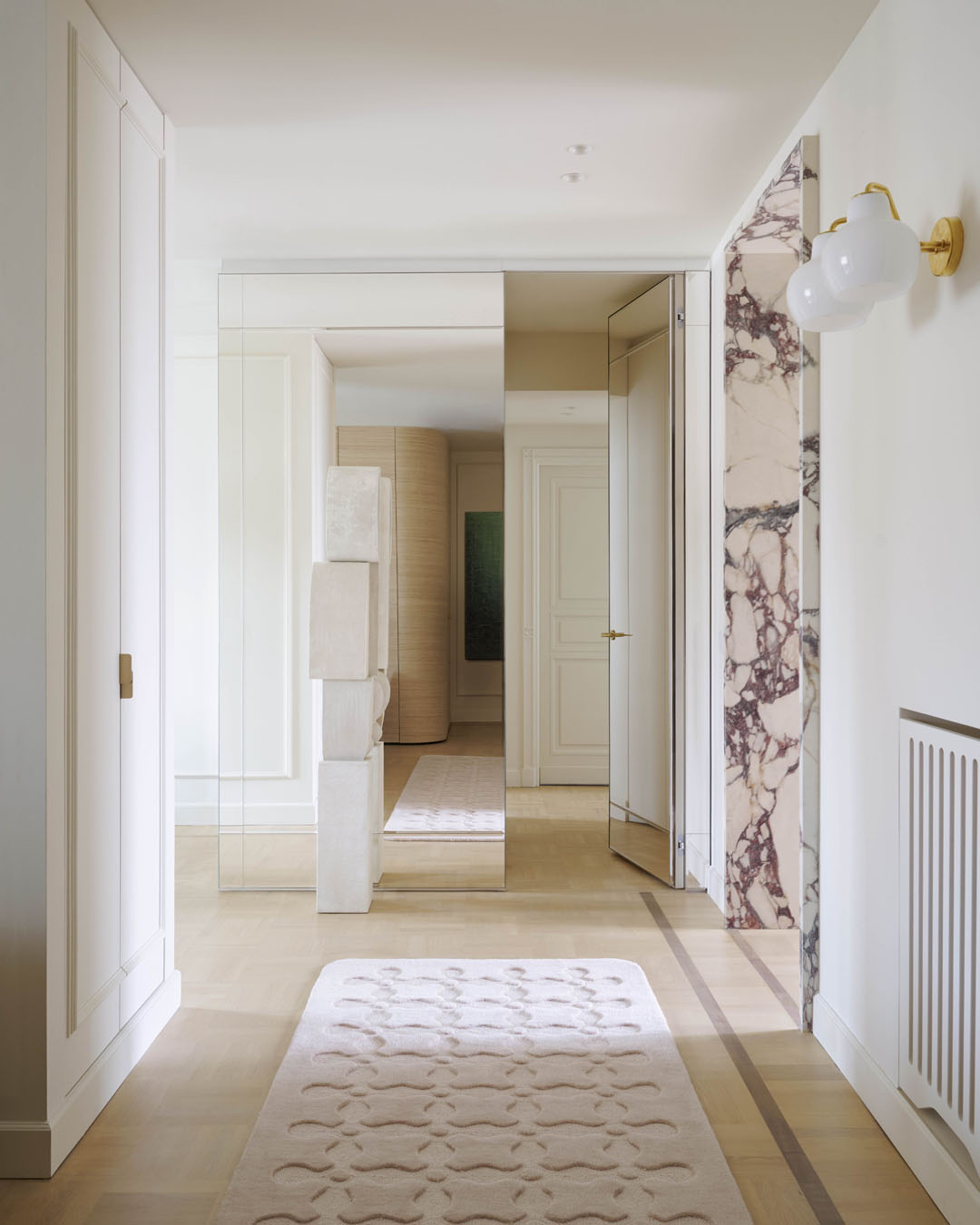
In the heart of Milan, within a 1930s rationalist building, Moitié Studio reinterprets a historic residence through a project that balances memory and contemporaneity.
The intervention is based on a process of subtraction: opening up space, enhancing natural light, and redefining the relationship between architecture and living.
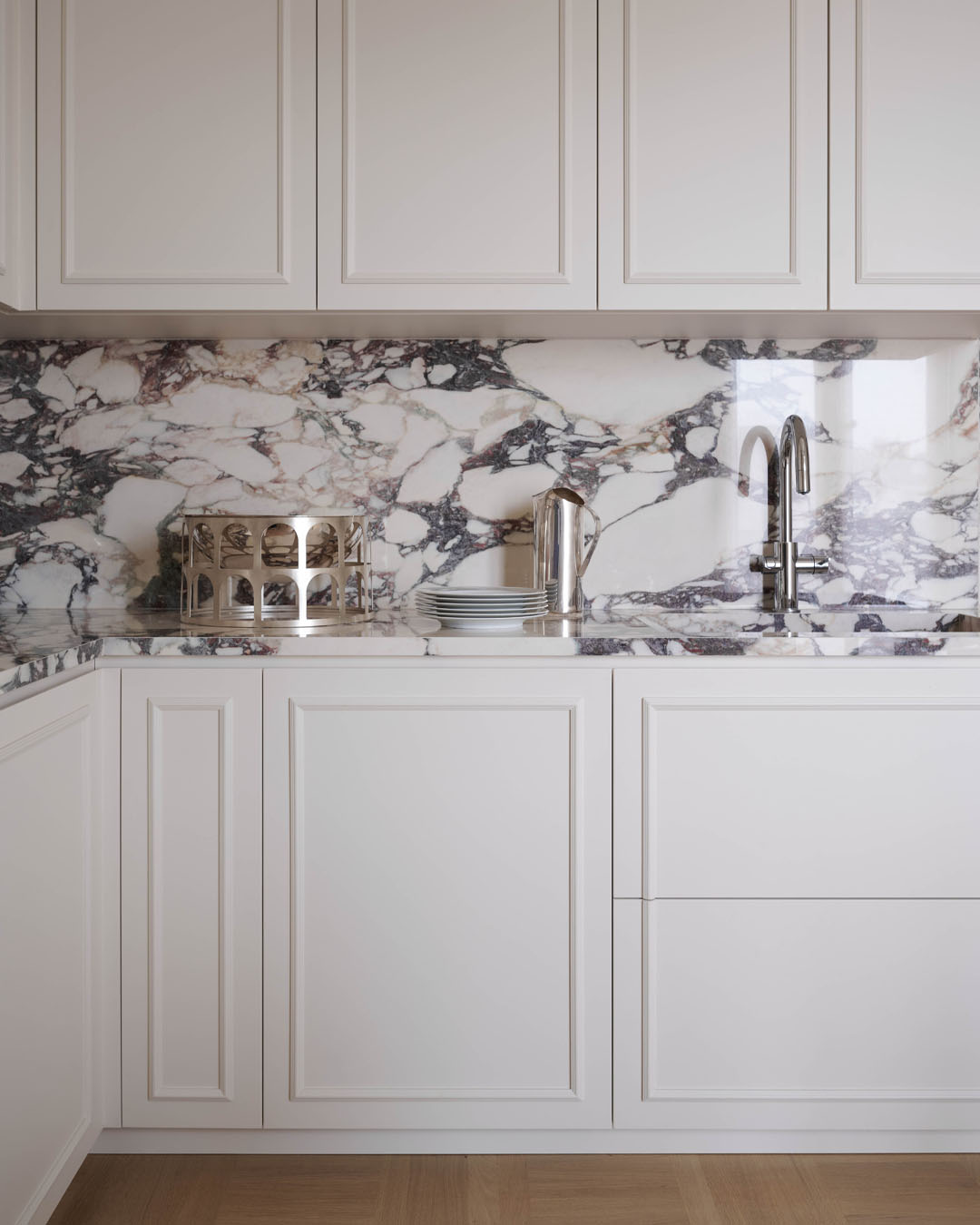
In this context, Ariostea ceramic surfaces become a true architectural language. Calacatta Viola Ultra marks the kitchen threshold with a strong, scenographic gesture, extending into a continuous surface that integrates worktop and backsplash.
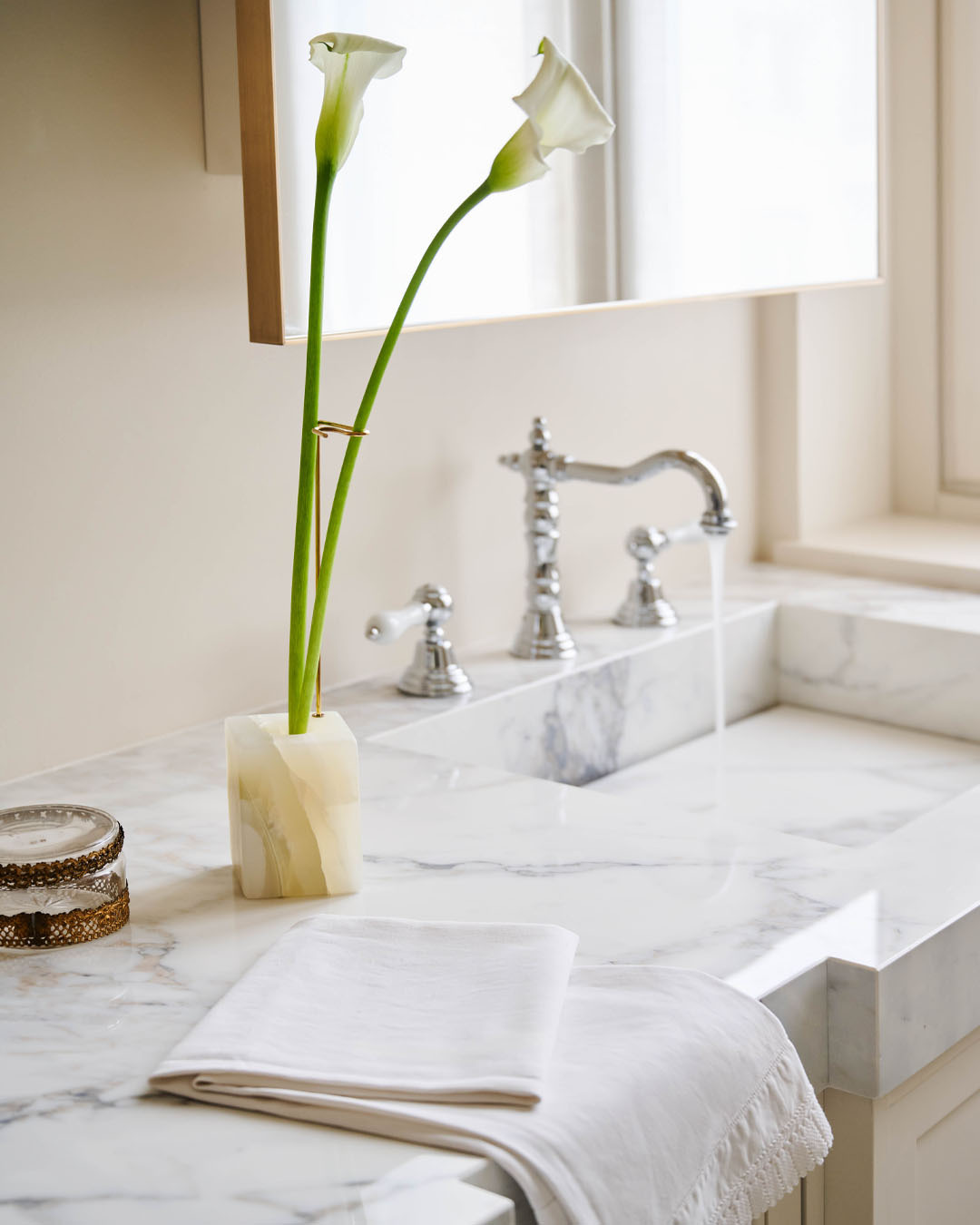
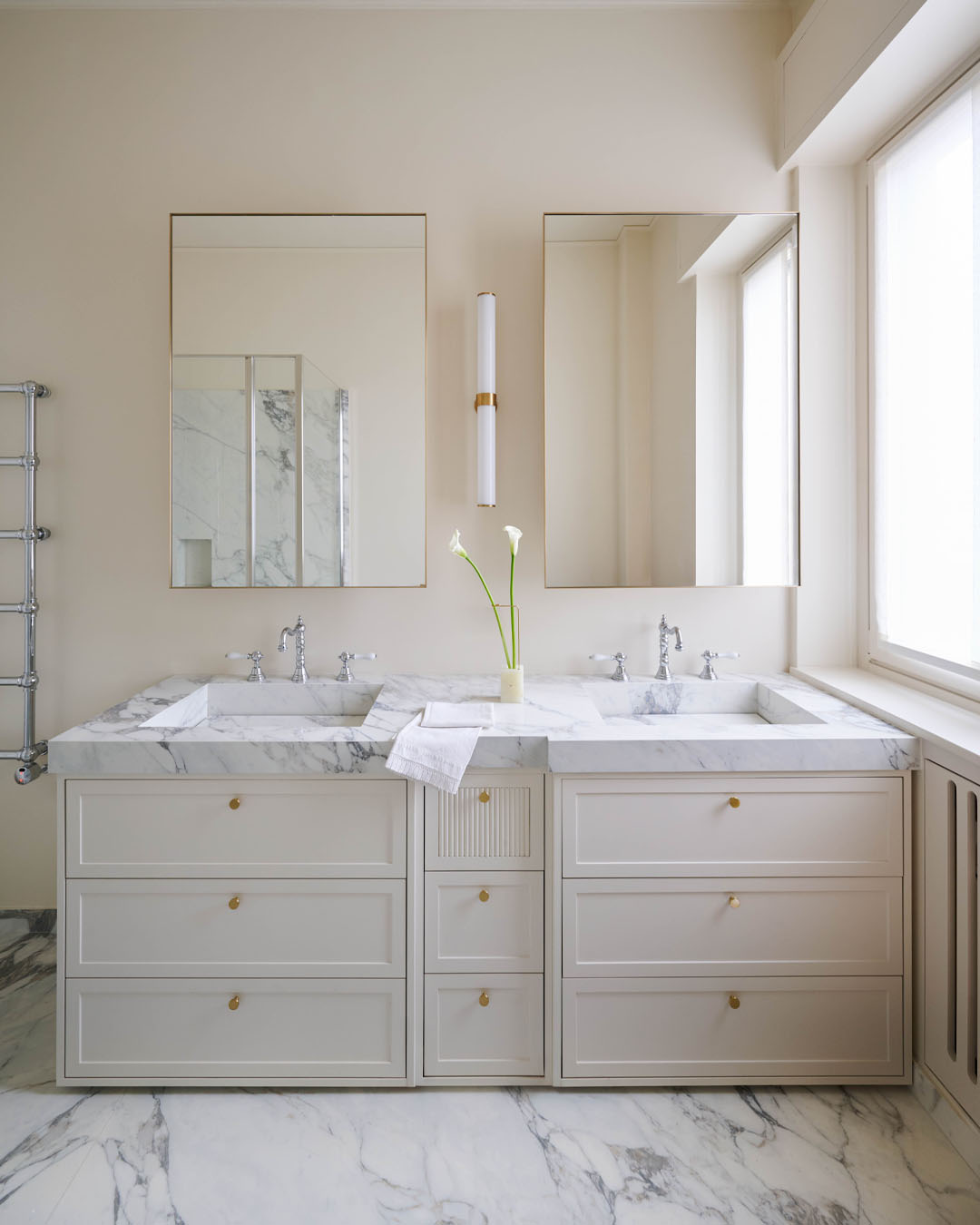
In the bathrooms, Arabescato Statuario Ultra and Calacatta Macchia Vecchia Ultra define monolithic volumes and refined environments, combining expressive richness with formal clarity.
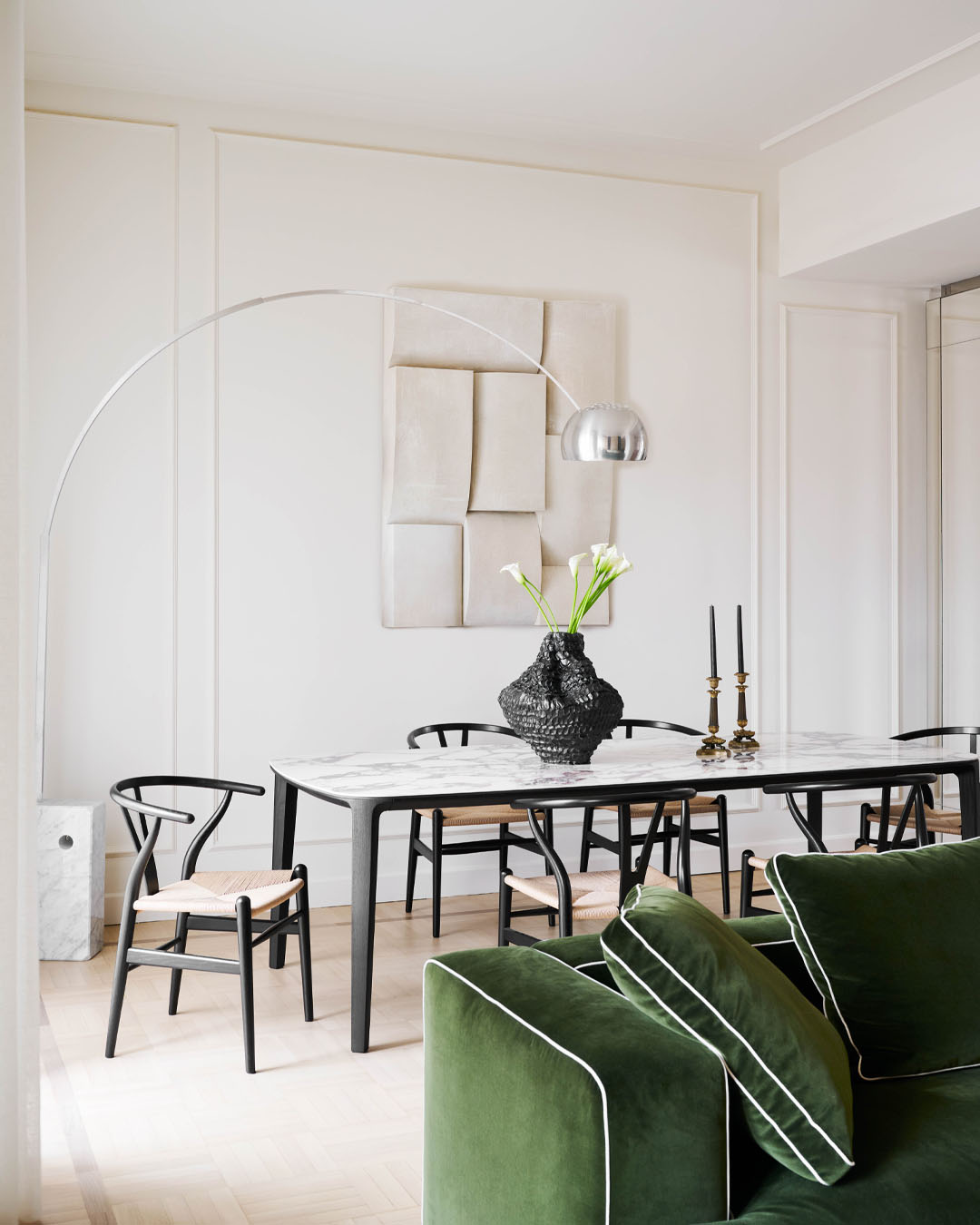
Particular attention was given to craftsmanship and fabrication: widespread 45° cuts, material continuity between surfaces and volumes, and precise design control aimed at achieving continuous veining and “book-match” effects.
Particular attention was given to craftsmanship and fabrication: widespread 45° cuts, material continuity between surfaces and volumes, and precise design control aimed at achieving continuous veining and “book-match” effects.
The care devoted to construction details, even in visible edges, defines a clean and rigorous reading of the elements. An approach that transforms ceramics from a simple cladding into an architectural element, capable of shaping geometry, depth, and formal precision.
Within the project, materiality is not only aesthetic but structural: it connects spaces, enhances perception, and gives coherence to the entire residence. A technical surface that combines performance and elegance, contributing to a sophisticated and timeless domestic narrative.
Architectural project: Moitié Studio @_moitiestudio www.moitiestudio.com
Photographer: Valentina Sommariva @valentinasommariva
Styling: Giulia Taglialatela @giulia_taglialatela